The back story
Pay first, drink standing: Rome’s cafés, the back story
A roastery by the Pantheon, a tea room born when tea came from chemists, and a café among statues.
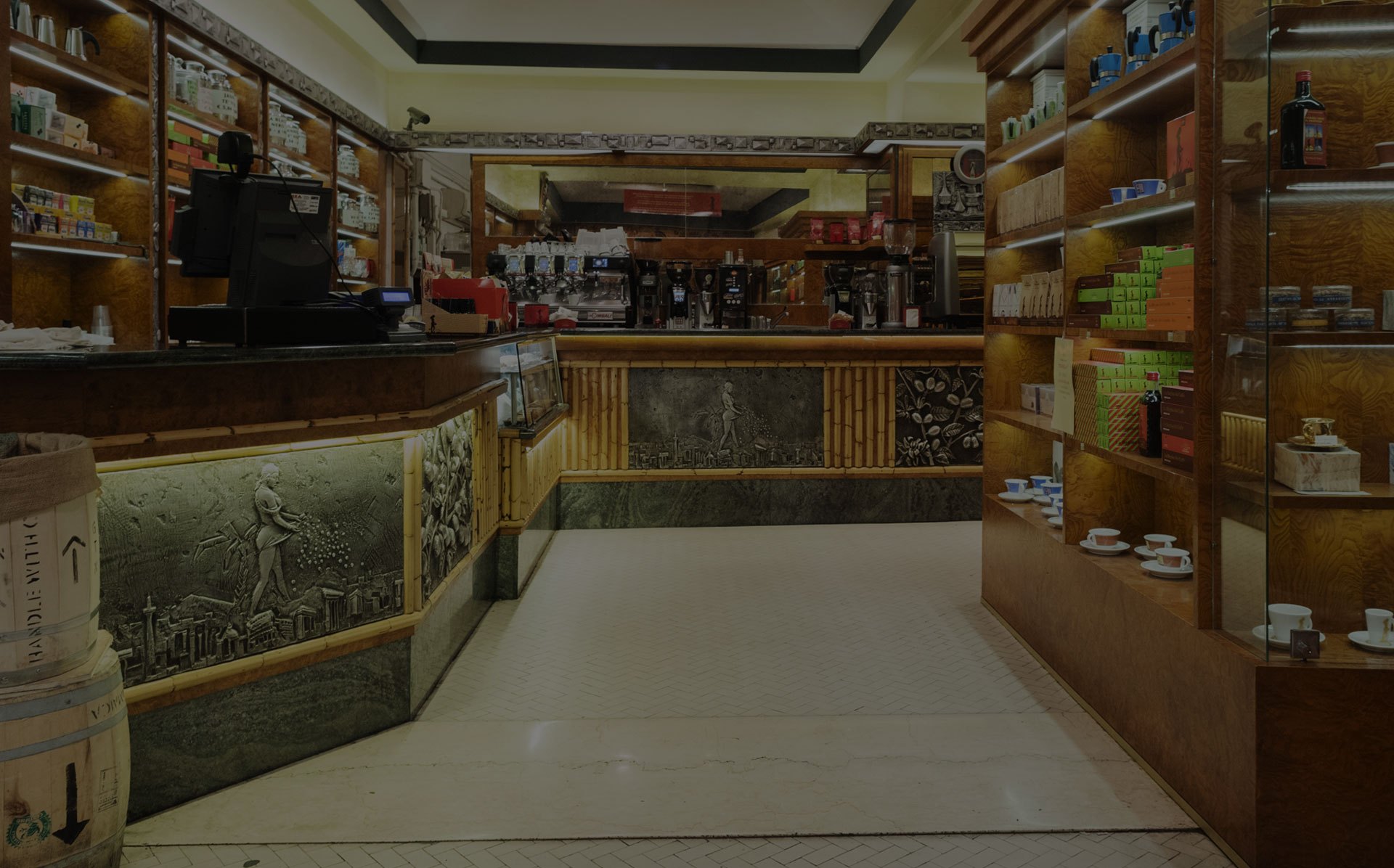
Photo Credit
Image courtesy of © Tazza d’OroIn Rome you pay before you order and drink your coffee standing at the counter. Behind that brisk ritual sit some long stories: a roastery by the Pantheon that opened its bar so customers could taste before buying, a dairy that became a gelato house, two Englishwomen who bet their savings on tea when Italians bought it from the chemist, and a sculptors’ studio where coffee is served among plaster giants.
The till before the cup
In a Roman bar the order of service runs backwards. You pay at the till first, carry the receipt to the counter and drink standing, shoulder to shoulder, in less time than it takes to find a table. Tazza d’Oro, a few steps from the Pantheon, began in 1944 as a roastery; its bar followed in 1946, opened, in the company’s own words, as a place to taste the blends before buying them.
That is the key to the Roman café: it was a shop counter first and a salon second. Tazza d’Oro still calls itself roasters across four generations, and in summer the crowd at its counter is waiting for granita di caffè, coffee crushed to ice. Its sower logo still decorates the shop front under the motto “Chi semina, raccoglie”, who sows, reaps. In a city built of marble, the most coveted thing on the bar is a glass of frozen coffee.
From the dairy to the gelato counter
Several of the city’s sweetest addresses began as something plainer. Giolitti was founded by Giuseppe and Bernardina Giolitti as a dairy in Monti, and its milk soon made it the dairy of the Royal Household. The ice cream came later, at the shop on the Via Uffici del Vicario near the Pantheon, where the family added gelato and homemade pastries; the recipes, Giolitti says, are still guarded by the family.
Across the river in Prati, Sciascia Caffè 1919 keeps the date in its name and the drama in the cup. Its own list of favourites runs to coffee with dark chocolate, a gran caffè and a crema caffè made to a recipe handed down through generations. A short walk away, Gelateria dei Gracchi makes artisan gelato on the street that gives it its name.
Tea from the chemist’s shop
Rome’s most English room arrived in 1893, when Isabel Cargill and Anna Maria Babington put their savings of 100 pounds into a tea and reading room for the city’s English-speaking community. It was a gamble: tea in Italy was then sold only in pharmacies. Babingtons opened on the Via Due Macelli and, about a year later, moved into the former stables of an 18th-century palace beside the Spanish Steps.
At Canova Tadolini the other customers have held the same pose for two centuries.
Anna Maria descended from Antony Babington, hanged in 1586 for plotting against Elizabeth I. Three centuries on, his descendant conspired only to serve afternoon tea to the English abroad, and the plot succeeded. Babingtons, now run by the fourth generation of Isabel’s descendants, says it has come through two wars, two pandemics and the arrival of fast food.
Coffee among the statues
On the Via del Babuino, Canova Tadolini occupies a sculptors’ studio. In January 1818 Antonio Canova guaranteed the lease of the workshop for his pupil Adamo Tadolini, whom he considered the most capable of his students, and four generations of Tadolini sculptors kept it until 1967. The plaster casts never left, so here the other customers have held the same pose for two centuries.
Bread, cream and the morning
The day starts earlier at Antico Forno Roscioli, near the Campo de’ Fiori, where the oven on the Via dei Chiavari dates back to 1824 and Marco Roscioli took it over in 1972; come in the morning for pizza bianca warm from the oven. For the other end of the meal, Pompi has made tiramisù since 1960, from its original shop on the Via Albalonga near San Giovanni.
Our advice: pay first, keep the receipt and drink your espresso at the counter, as Romans do. Save the sitting down for rooms worth the time: afternoon tea at Babingtons, or a coffee among the casts at Canova Tadolini. In summer, order the granita at Tazza d’Oro and eat it standing, before the Pantheon’s heat does the job for you.

Photo Credit
Image courtesy of © Orlando1312 · CC BY-SA 4.0 via Wikimedia CommonsWhy it's on our list
- The till before the cup
- From the dairy to the gelato counter
- Tea from the chemist’s shop
- Coffee among the statues
Location
The map comes from Google Maps, which sets its own cookies once it loads.
More in depth
 The back storyFrom the foglietta to the speakeasy: how Rome drinks, the back storyPapal wine measures, a temple turned stock exchange and a hotel garden where Picasso met Cocteau.
 The back storyFrom the Hassler to the new palazzo hotels: the grand hotels of RomeFrom the Hassler to new palazzo hotels: where to stay.
 The back storyAncient, papal and Baroque: how to read the Eternal CityAncient, papal and Baroque Rome: the city in three walks.