The back story
Jewels, aqueducts and amphorae: shopping in Rome, the back story
Bulgari’s “Old Curiosity Shop”, a store over an aqueduct and a market on amphorae: Rome’s shopping.

Photo Credit
Image courtesy of © Carlo Pelagalli · CC BY-SA 3.0 via Wikimedia CommonsRome’s shopping runs from the Spanish Steps to the river port. On the Via dei Condotti a jeweller once named his shop after Dickens to lure English and American buyers; on the Via del Tritone a department store shows off a Roman aqueduct in its lower level; and in Testaccio the covered market stands over a storehouse built from amphorae. Here is the back story, and how to shop it.
The street below the Steps
Rome’s smartest shopping runs downhill. The Tridente, the three streets fanning out from the Piazza del Popolo, took shape between the 15th and 17th centuries, and the Via del Babuino carries it to the Piazza di Spagna. The Via del Corso, the trident’s middle prong, the city’s tourism board sums up as a two-kilometre open-air shopping centre.
At the Piazza di Spagna the Via dei Condotti begins, which the board calls the most elegant and exclusive street in Rome, with the Via Borgognona and the Via Frattina at its side. Here the great Italian houses share the pavement with the international names, and window-shopping remains the one pleasure on the street that comes without a bill.
Its grandest story is a jeweller’s. Sotirio Bulgari opened his first Rome shop on the Via Sistina in 1884 and a second on the Via dei Condotti in 1894; in 1905 he moved into a larger store at Via dei Condotti 10, christened the “Old Curiosity Shop” to attract British and American visitors. A Dickens title over a Roman jeweller’s door tells you exactly who was buying.
The shop first sold silver, antiquities and oriental objects; fine jewels arrived in 1915, and the renovation of 1934 introduced the BVLGARI name, with its Latin V, on the façade. The house still treats the store as its first temple.
A department store over an aqueduct
On the Via del Tritone, Rinascente Roma Tritone opened in October 2017, after a renovation that the company says took eleven years. On its lower level, visitors can see remains of the Aqua Virgo, the aqueduct of 19 BC whose water still reaches the Trevi Fountain. Few shopping trips include a Roman water main, and fewer let you see it before the handbags.
The building is a piece of modern tailoring too: eight floors behind a façade designed by Vincent Van Duysen, wrapped around a small early-20th-century building known as the Palazzetto, with a rooftop terrace over the city.
A Dickens title over a Roman jeweller’s door tells you exactly who was buying.
Markets, old and new
The Campo de’ Fiori market moved here from the Piazza Navona in 1869 and still sets up each morning except Sundays, beneath the statue of Giordano Bruno. Testaccio’s market moved in 2012 to a new covered hall, the Mercato di Testaccio; beneath it, excavations uncovered a Roman horreum, a storehouse, with walls built from reused amphorae. In Testaccio, even the foundations were once somebody’s packaging.
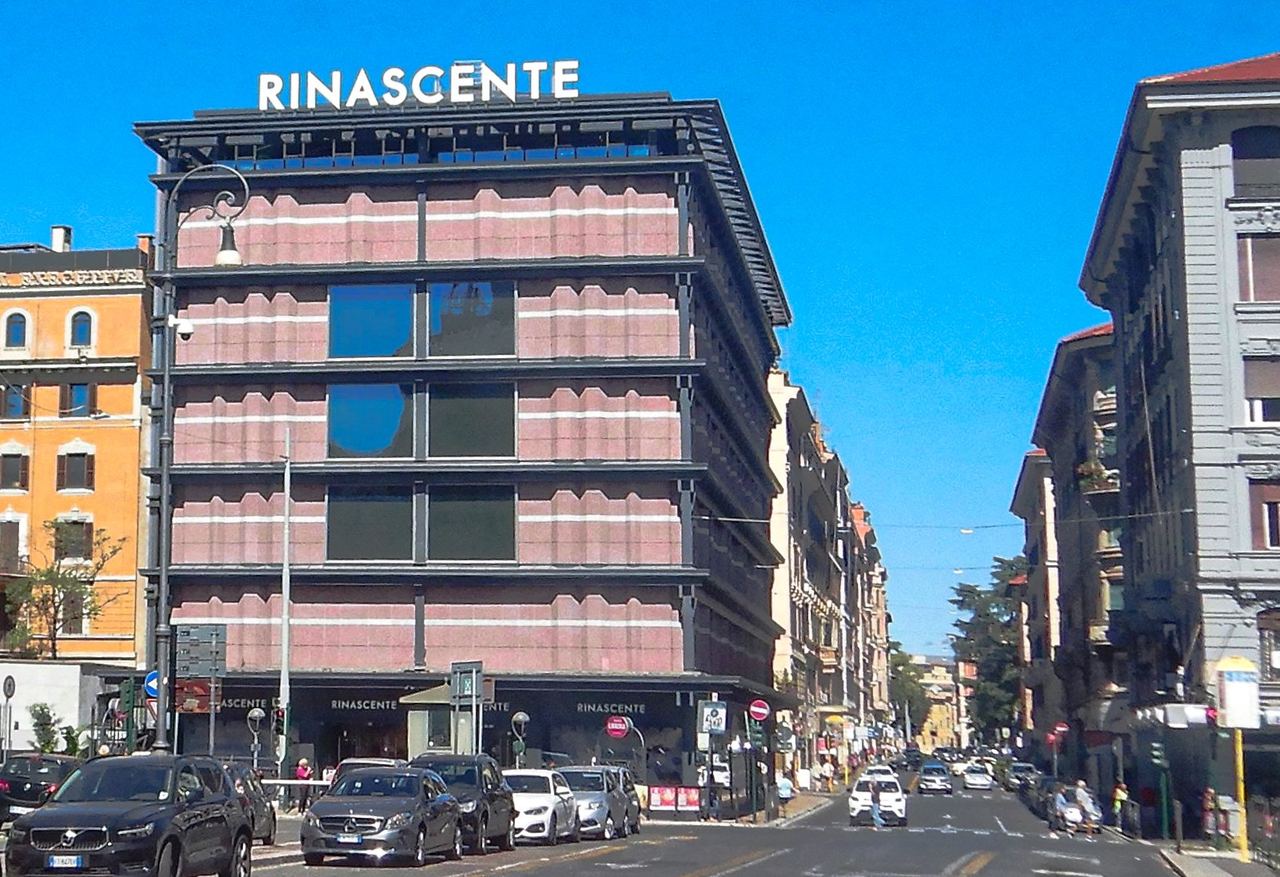
Photo Credit
Image courtesy of © Albarubescens · CC BY-SA 4.0 via Wikimedia CommonsVolpetti, the historic drogheria on the Via Marmorata, has sold cheeses, salumi and Roman specialities since 1973. Castroni began in 1932 and still produces its own coffee, from Central America, Indonesia and Africa, alongside fine wines, oils and Italian specialities; its shop at Via Frattina 79 sits a short walk from the Spanish Steps. Eataly opened in Rome in 2012, filling 16,000 square metres beside the Ostiense station.
The friars’ perfumery
The oldest name on the list comes from Florence. In 1221 twelve Dominican friars obtained the use of the site of Santa Maria Novella; on 15 October 1612 a council of the convent voted to open a public pharmacy, and in 1871 the business became a secular company. The Officina Profumo-Farmaceutica di Santa Maria Novella now sells its colognes and soaps in Rome, eight centuries on from the friars’ garden.
Our advice: walk the Via dei Condotti on a weekday morning and come down from the Spanish Steps rather than up from the Corso; at number 10, look up, since the Latin V on the façade dates from 1934. Do the markets early, the Campo de’ Fiori before ten, Testaccio for lunch, and leave room in the case for coffee from Castroni and a bottle of Santa Maria Novella cologne. At Rinascente, go down to the aqueduct before you go up to the terrace.
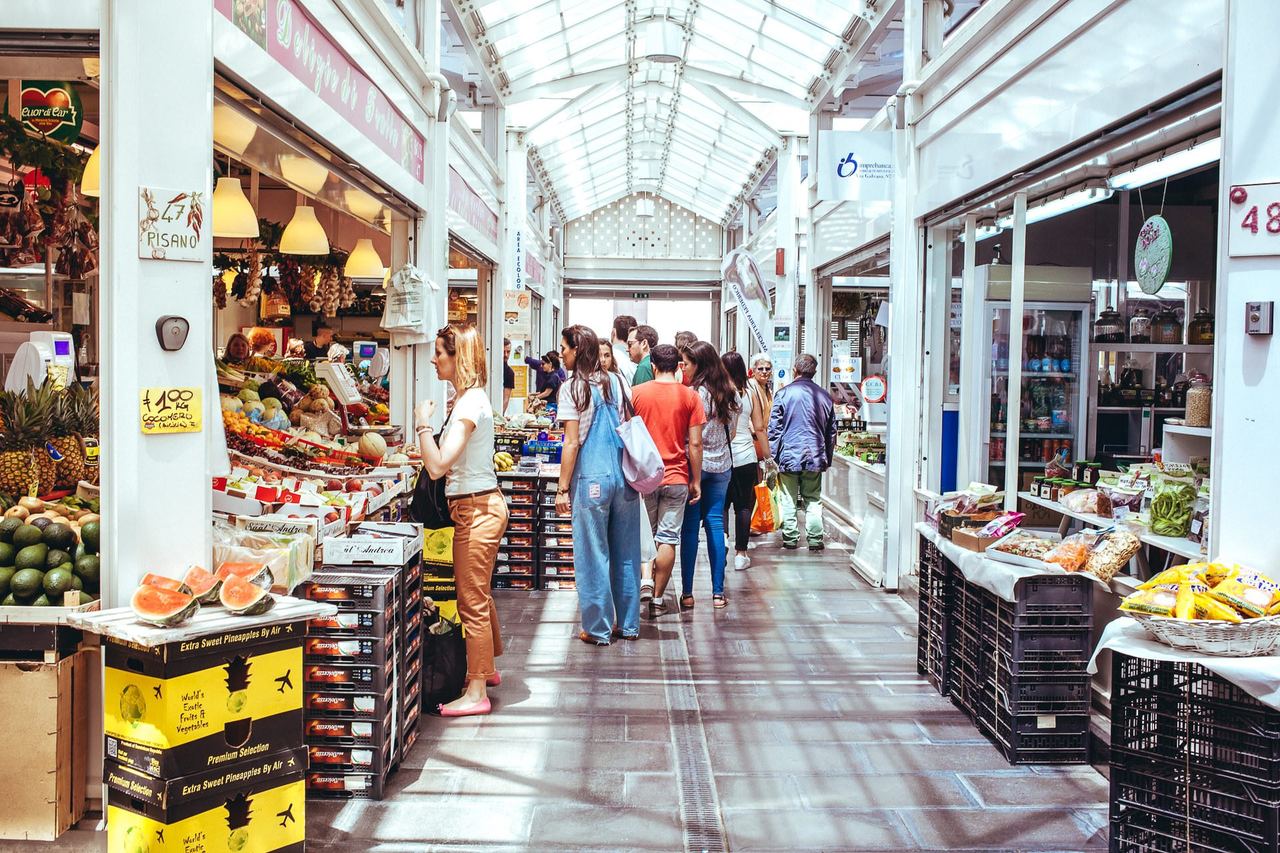
Photo Credit
Image courtesy of © Mercato di TestaccioWhy it's on our list
- The street below the Steps
- A department store over an aqueduct
- Markets, old and new
- The friars’ perfumery
Location
The map comes from Google Maps, which sets its own cookies once it loads.
More in depth
 The back storyPalazzo apartments, Parioli villas and the notary: buying in RomePalazzo apartments, villas and how a sale works in Italy.
 The back storyRome by rail: Termini, the high-speed lines and the Leonardo ExpressTermini, high-speed trains and the Leonardo Express.
 Coming soonComing soon: the tech the makers have promisedOfficially announced tech, from Gemini glasses to Meta's VR specs, plus the newest arrivals.