Objects of Desire
Sound boxes on the Flaminio: how Rome learned to listen
Renzo Piano’s three halls, an academy founded in 1585 and an opera house born on 27 November.
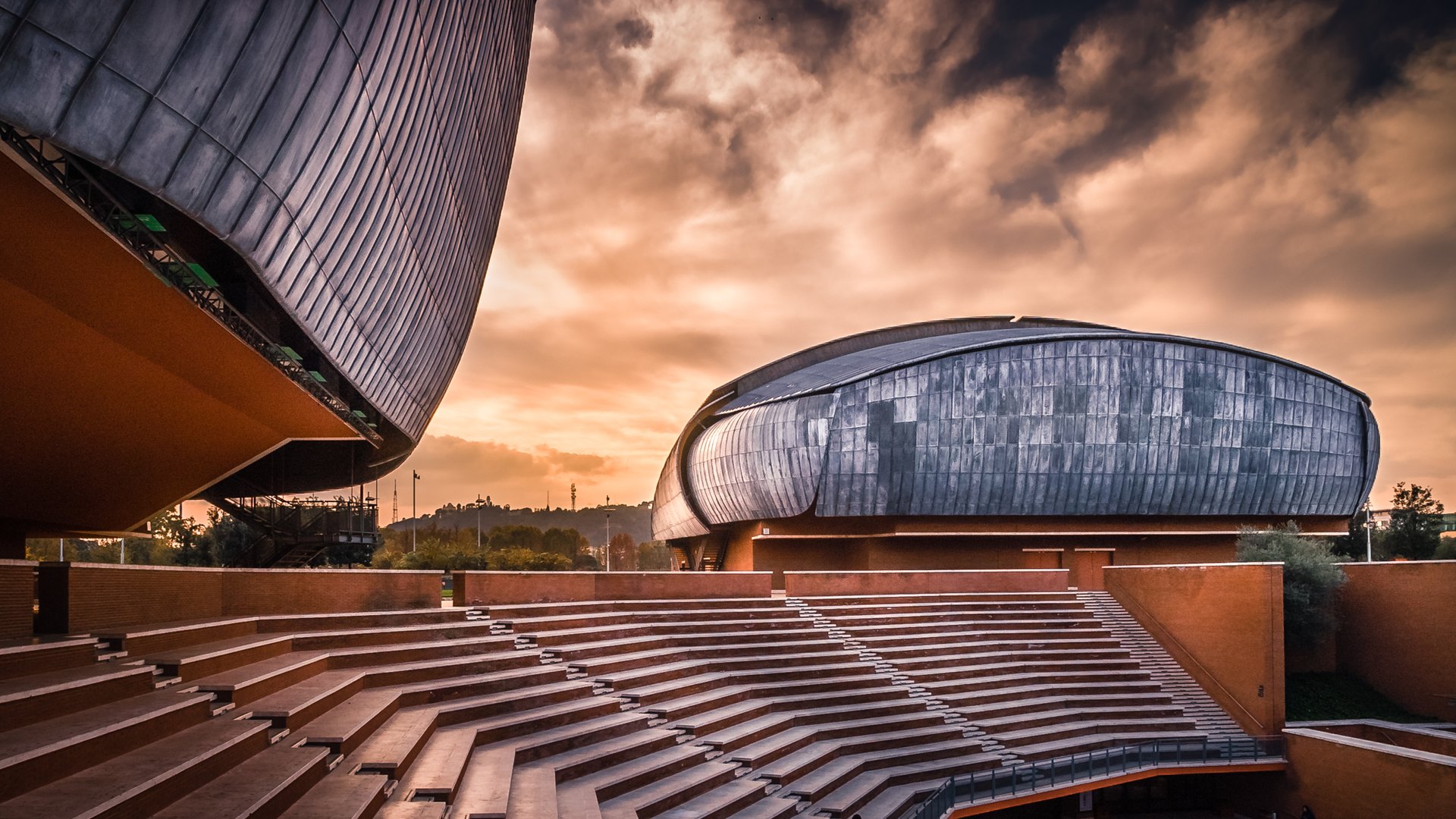
Photo Credit
Image courtesy of © Auditorium Parco della Musica Ennio MorriconeRome has been staging music for longer than most cities have had streets, so why did it wait until 2002 for a proper concert hall? Here is how Renzo Piano’s Auditorium came to rest on a Roman villa, why Santa Cecilia’s orchestra once played inside the Augusteo, and what is on this winter, checked against the venues’ own pages in November 2026.
Three halls and a villa
From the hill above the Flaminio, the Auditorium Parco della Musica Ennio Morricone looks like three giant beetles that have come to the park to listen. The Renzo Piano Building Workshop describes each hall as enclosed in a container resembling a giant soundbox, set symmetrically around an open-air amphitheatre.
The City of Rome held an international competition in 1993, and Piano’s scheme was announced the winner on 27 July 1994. In November 1995 the diggers stopped: the remains of an ancient Roman villa had come to light. In Rome even a building site turns up an ancestor. The ruins were kept and woven into the complex, and the design moved to make room for them.
The Sala Petrassi and the Sala Sinopoli opened on 21 April 2002, and the Sala Santa Cecilia on 21 December 2002. The numbers are generous: 2,744 seats in the Santa Cecilia, 1,133 in the Sinopoli, 673 in the Petrassi, which has a movable floor and ceiling, and 3,000 to 5,000 in the open-air cavea. Since the composer’s death in 2020 the whole place has carried Ennio Morricone’s name.
An academy from 1585
The resident orchestra belongs to an institution older than most of the churches you will pass on the way. The Accademia Nazionale di Santa Cecilia was founded officially in 1585, when Pope Sixtus V issued the bull Ratione congruit; its circle in the 1570s included Giovanni Pierluigi da Palestrina. A permanent choir and orchestra followed in 1895.
The orchestra has moved house more often than a Roman cardinal: the Sala Accademica until 1908, the Augusteo from 1908 to 1936, the Teatro Adriano after that, and finally the Parco della Musica. Antonio Pappano, a former music director, still returns to the podium, and Daniel Harding has held the post since the 2024/2025 season.
This month shows both men at work. Pappano conducts Petrassi’s Salmo IX and Tchaikovsky’s Sixth Symphony on 19, 20 and 21 November; Harding follows on 26, 27 and 28 November with Strauss, the Vier letzte Lieder sung by Rachel Willis-Sørensen, and Brahms’s Fourth. Both play in the Sala Santa Cecilia.
In Rome even a building site turns up an ancestor.
The Costanzi’s birthday
Across town, near the Piazza della Repubblica, the Teatro dell’Opera di Roma keeps a more theatrical history. Domenico Costanzi built it on the site of the former villa of the emperor Elagabalus, and it opened on 27 November 1880 with Rossini’s Semiramide, in the presence of the Italian royal family.
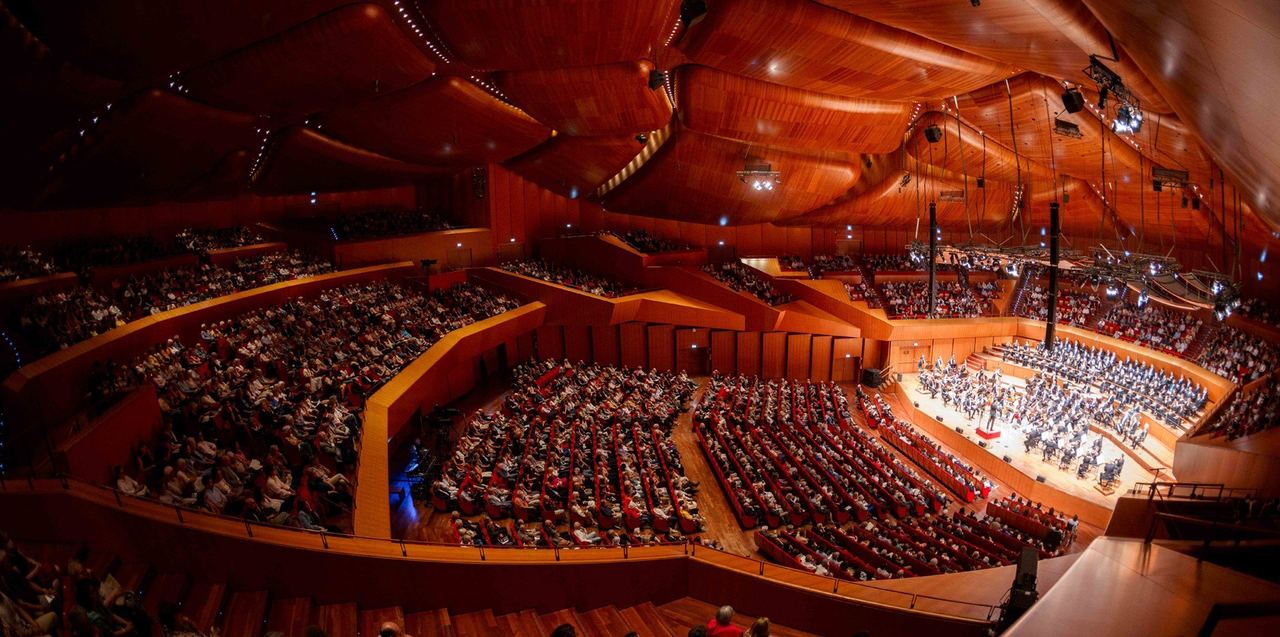
Photo Credit
Image courtesy of © Accademia Nazionale di Santa CeciliaTwo premieres made its name: Mascagni’s Cavalleria rusticana on 17 May 1890 and Puccini’s Tosca on 14 January 1900. Tosca ends with a leap from Castel Sant’Angelo, a short walk from the theatre and, mercifully, not part of the evening for anyone in the stalls. The summer season moves outdoors to the Baths of Caracalla.
This year the house marks its birthday in style: Stravinsky’s The Rake’s Progress opens on 27 November, 146 years to the day after Semiramide, with Michele Mariotti conducting, Rafael R. Villalobos directing and Lawrence Brownlee as Tom Rakewell, with further performances to 5 December.
This winter in the halls
December belongs to the season. Enrico Onofri conducts the Accademia’s orchestra and chorus in the first three cantatas of Bach’s Christmas Oratorio on 10, 11 and 12 December. In the same Sala Santa Cecilia, the Auditorium’s own programme brings Joss Stone with a symphony orchestra on 5 December, Patti Smith on 6 December and Herbie Hancock, with Terence Blanchard, on 14 December.
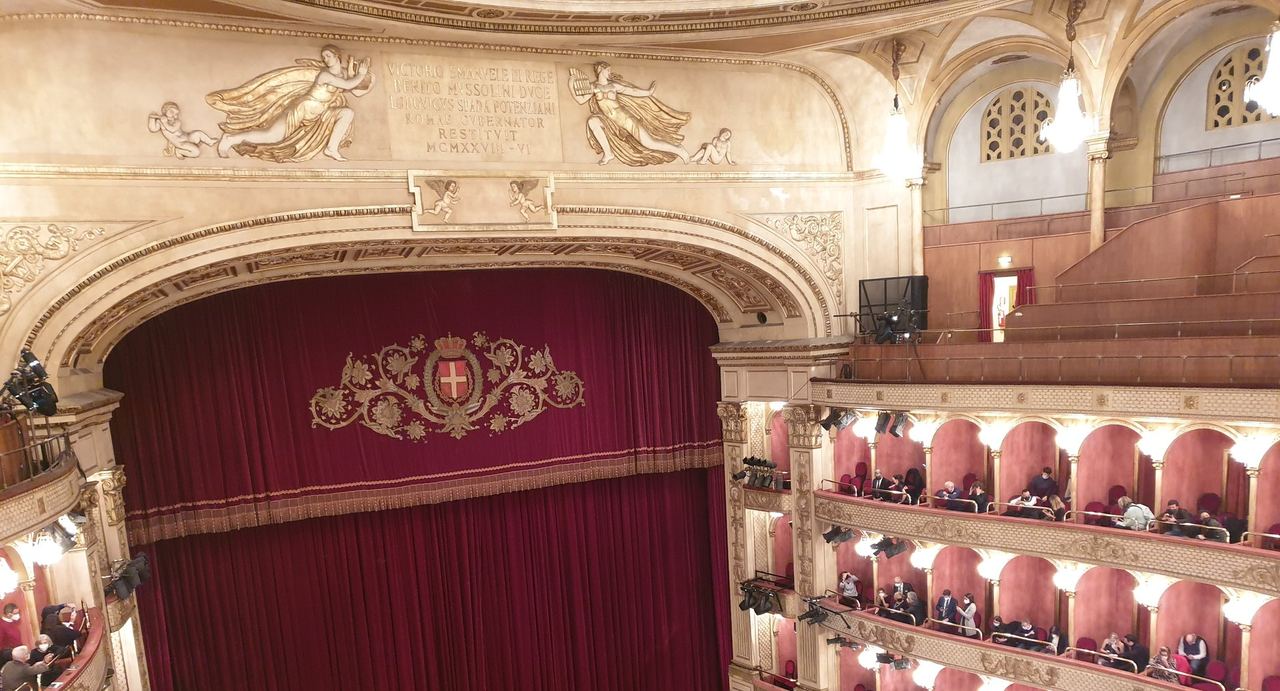
Photo Credit
Image courtesy of © Udine2812 · CC BY-SA 4.0 via Wikimedia CommonsThe halls were built for exactly this kind of week: a Baroque oratorio one night and a jazz pianist the next, with nobody asked to move the furniture. The Auditorium’s Christmas festival runs from 5 December to 6 January, so the foyer’s 150-metre ring is rarely quiet before Epiphany.
Our advice: for the Auditorium, arrive early to walk the hanging gardens; for the Costanzi, book on operaroma.it and look up from the stalls before the lights go down.
Why it's on our list
- Three halls and a villa
- An academy from 1585
- The Costanzi’s birthday
Location
The map comes from Google Maps, which sets its own cookies once it loads.
More in depth
 Objects of DesireGods among the engines: Rome’s machine roomsMarble gods beside 7,500 hp diesels, and a film factory of 400,000 square metres.
 Objects of DesireGlass, travertine and a station 32 metres down: Rome builds newRichard Meier’s glass box for the Ara Pacis, Zaha Hadid’s MAXXI and Metro C’s museum stations.
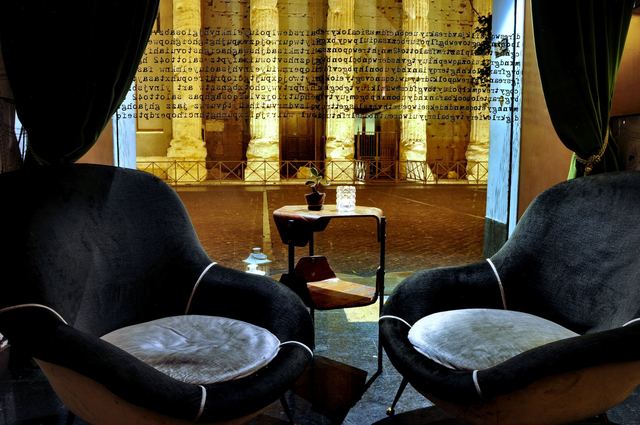 Objects of DesireThree equal measures: the Negroni, the Americano and Rome’s barsThe IBA’s Negroni and Americano, a password-only speakeasy and a book bar facing Hadrian’s columns.